
The Two-Week Test Navigating Life When You Can’t Get Behind the Wheel

Freedom is not defined by a set of keys. It is found in having options, maintaining relationships, and creating systems that allow you to continue living well.
Linda had never thought much about driving. At 67, she still ran errands, attended church every Wednesday, and met friends for coffee every Friday morning. Then cataract surgery meant she couldn't drive for two weeks. Suddenly, simple routines became complicated. How would she get groceries? Who would take her to physical therapy? What surprised Linda most wasn't the inconvenience. It was how much she learned about her life—and her support system—in those fourteen days.
Her experience gets at something many of us do not notice until our routine is interrupted. A car can feel so woven into daily life that we rarely stop to consider what happens when we cannot use it.
In our work with the Stepping Stones series at Sage & Summit, we often talk about building a life that stays steady and dignified even when the routines and systems you rely on begin to change.
The "Two-Week Test" is a practical framework for that kind of preparation.
It is not an exercise in restriction.
It is a thoughtful invitation to audit your independence.
The Philosophy of the Test
We often wait for disruption to force our hand.
A surgery, a change in vision, or a short illness can quickly turn an ordinary errand into a real obstacle.
When we react, we feel vulnerable.
When we prepare, we keep more control.
The Two-Week Test asks you to step away from driving for fourteen days and notice what your life requires. It gives you time to identify gaps while you still have the clarity to address them.

Phase 1: Mapping the Essential
Before you begin, get clear on where your life actually takes place.
Linda discovered this quickly. The driving itself was not the point. The point was how many parts of her week depended on it.
Questions to Ask Yourself
How often do you drive each week?
Could groceries be delivered?
Who could you call in an emergency?
Is there public transportation available?
Could you walk to any essential services?
We often move through our days on autopilot, unaware of how many small trips support our well-being.
Take a moment to list your non-negotiables:
Food and Groceries — Where do you get your food? How often?
Medical Care — Your physicians, your pharmacy, your physical therapist.
Staying Connected — Your place of worship, your bridge club, your morning coffee group.
Everyday Errands — The hardware store, the dry cleaners, the library.
When you look at this list, do not see it as a list of "problems."
See it as a map of your life.
Your goal during the Two-Week Test is to maintain that map without being the one behind the wheel. Linda's experience reminds us that this shift is not about doing less. It is about adapting with intention rather than giving up independence.
Phase 2: Building Your Support Network
Independence is often a misunderstood word.
True independence is not about doing everything alone; it is about being able to make choices and organize your life in a way that works for you.
During the Two-Week Test, you will likely need to lean on a support network. This is where many people feel the most resistance. We have been conditioned to believe that asking for a ride is "being a burden."
But perhaps it deserves to be reconsidered.

When you ask a friend or family member to assist with a specific, planned outing, you are not imposing. You are allowing others to support you in the same way you have likely supported others throughout your own life.
Strategies for a Balanced Network:
The Reciprocal Exchange — Perhaps you can no longer drive, but you can host the book club. You provide the space and the refreshments; others provide the transportation.
The "While You're Out" Request — Coordinate with neighbors for grocery runs. One trip can often accomplish two errands.
Transportation Alternatives — Explore ride-sharing services, local transit, and grocery delivery options. Even if you rarely use them, simply knowing they exist can provide peace of mind.
Phase 3: The Emotional Transition
The most difficult part of the Two-Week Test is not always the logistics.
It is the pause.
It is the moment you realize you can't just "pop out" for a gallon of milk. Linda felt that interruption too. You may feel frustration, or a subtle loss of identity.
This is part of the process.
At Sage & Summit, we believe preparation gives us choices. And choices preserve dignity.
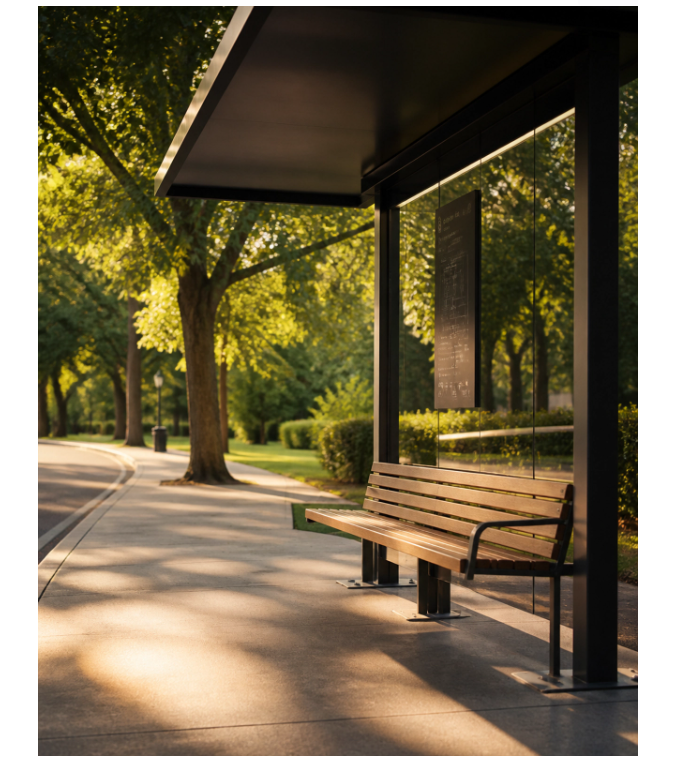
Instead of treating the wait for a bus or a ride as lost time, try seeing it as a slower interval. Notice your neighborhood. Notice what changes when you are no longer moving through it at driving speed.
This shift matters. You are not "stuck." You are practicing a different pace.
Many people who complete the Two-Week Test discover something unexpected. Their greatest fear was not losing the car itself. It was losing their sense of freedom. Yet freedom is not defined by a set of keys. It is found in having options, maintaining relationships, and creating systems that allow you to continue living well.
> Freedom is not defined by a set of keys. It is found in having options, maintaining relationships, and creating systems that allow you to continue living well.
Integrating the Stepping Stones Framework
The Two-Week Test is a practical application of the principles found in our Stepping Stones workbooks.
These workbooks are designed to help you translate the insights of the Sage & Summit imprint into structured action. If you find the Two-Week Test challenging, the Stepping Stones guides offer specific worksheets for:
Inventorying your local assets — identifying resources within walking distance.
Scripts for connection — learning how to ask for help with dignity and clarity.
Financial planning for mobility — comparing the costs of car ownership with transportation alternatives.
You can explore our full range of publications and companion materials on the Civara Shop.
The Road Ahead
After your fourteen days are complete, take time to debrief.
What was the hardest part?
What was surprisingly easy?
You might find that you actually enjoy the lack of traffic.
You might realize that your neighborhood is more walkable than you thought.
Or, you might realize that you need to make structural changes — perhaps moving closer to services, choosing a more walkable community, or relocating to a place that better supports the lifestyle you want to maintain.

The path to a well-planned life is not always linear.
It requires the courage to look ahead and the discipline to prepare.
By taking the Two-Week Test, you are not admitting defeat.
You are claiming your future.
You are stepping onto a path you have already mapped.
Sloane C. Jamison is an author and editor for Sage & Summit, an imprint of Civara focused on aging with dignity and purpose. Explore additional articles, books, and companion resources at CivaraPress.com.
