
The Myth of Being a Burden
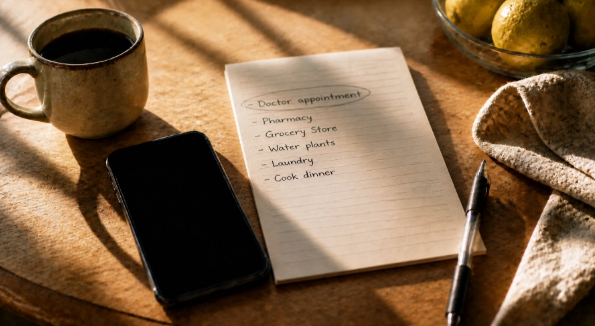
Martha sat at her small oak kitchen table, the morning sun tracing patterns across a half-finished crossword puzzle. Her car was in the shop, and she had a specialist appointment across town at two o’clock.
She picked up the phone three times. Three times, she set it back down.
She thought of her daughter, Sarah, who had a busy law practice and two teenagers. She thought of her neighbor, Jim, who was always kind but surely had his own errands. Martha didn't want to be "that person." She didn’t want to be an interruption. She didn’t want to be a burden.
She eventually took an expensive, stressful series of bus transfers that left her exhausted and late.
When Sarah called that evening to check in, Martha mentioned the long bus ride. There was a pause on the other end of the line, a heavy, quiet beat of realization.
"Mom," Sarah said, her voice soft but tinged with a genuine ache. "I was actually in that neighborhood all afternoon for a deposition. I would have loved to pick you up. I wish you had told me sooner."
In that moment, Martha realized that her "independence" hadn't actually protected her daughter. It had created a wall. By trying to avoid being a burden, she had unintentionally denied Sarah the chance to be a daughter.
This is the myth of being a burden. It is a story we tell ourselves because it feels safer than risking rejection, but it often ends up making us, and the people who love us, feel alone.
Where Does This Fear Come From?
If you have ever felt that sharp hesitation before asking for a ride, a meal, or even a listening ear, you are not alone. The fear of being a burden is one of the most common emotional hurdles we face as we move through the chapters of independent living.
But where does it start?
For many of us, independence is our identity. We have spent decades being the ones who provide, the ones who solve, and the ones who carry. When the roles begin to shift, it can feel like a loss of self. If I am not the "doer," who am I?
There is also a quiet, persistent pride that whispers we should be able to handle it all. We grew up in a culture that celebrates the "rugged individualist"—the person who needs nothing and no one. We internalize the idea that needing help is a sign of a cracking foundation, rather than a natural part of a house that has stood through many seasons.
Sometimes, the fear comes from previous experiences. Perhaps you once asked for help and were met with a sigh, a complaint, or a conditional "yes" that felt like a debt. Those memories linger. They train our nervous systems to expect rejection, so we stop asking to keep ourselves safe from that sting.
Most of all, there is the fear of losing control. We worry that if we let someone into the driver’s seat, literally or metaphorically, we might never get the keys back. We equate assistance with a loss of agency.
But as we discussed in our recent look at The Permission to Be Helped, true independence isn’t the absence of help; it is the presence of choice. When we understand the source of our fear, we can begin to dismantle the myth.

Being a Burden Isn’t the Same as Needing Help
To move forward, we have to clarify our language. We often use the word "burden" to describe any situation where we aren't 100% self-sufficient. This is a linguistic error that leads to an emotional one.
There is a profound difference between dependence, interdependence, and reciprocity.
Dependence is often what we fear, a one-way street where one person carries the full weight while the other is passive. It feels heavy because it lacks balance.
Interdependence, however, is the natural state of human thriving. It is a circle, not a line. It acknowledges that while I might need a ride today, I am the one who provides the listening ear, the family history, or the wisdom of experience tomorrow.
Reciprocity doesn't always happen in the same hour or with the same currency. You might receive a ride to the doctor and give back by being the steady, calm presence your daughter needs when her own life feels chaotic.
When you ask for help, you aren't handing someone a heavy weight and walking away. You are inviting them into a shared moment of life.
Most Healthy Relationships Already Work This Way
Think back to when your children were young, or when a friend was going through a divorce, or when a coworker was overwhelmed. Did you help them because you felt forced, or because you wanted to contribute to their well-being?
Relationships naturally ebb and flow. They are like a garden, some seasons require more watering, others more pruning.
Parents and Children: For years, you were the gardener. You provided the soil, the water, and the light. As the seasons change, allowing your adult children to help you isn't a reversal of roles; it is the harvest of the love you planted.
Friends and Neighbors: We often feel comfortable building a personal support network for others, yet hesitate to use it ourselves. But a neighbor who brings over extra soup isn't doing it out of obligation, they are doing it to feel connected to the person next door.
Spouses: In a long partnership, the "help" often becomes invisible. It’s the way one person makes the coffee while the other checks the tires. It is a constant, quiet dance of mutual support.
When we refuse help, we aren't just "saving" the other person from a task. We are inadvertently telling them that we don't trust them to care for us, or that we don't believe our relationship is strong enough to handle a request.
Allowing someone to help you is an act of vulnerability that actually strengthens the bond. It says, "I trust you with my needs."

How to Ask Without Feeling Guilty
If you’re ready to trade the myth of the burden for the reality of connection, it helps to have a framework. Asking for help is a skill, and like any skill, it gets easier with practice.
Here is a practical way to approach it:
1. Be Specific
Vague requests like "I might need some help later" are hard for people to say yes to because they don't know what they're committing to. Instead, try: "Could you pick me up at 1:30 on Tuesday for my appointment? It should take about an hour." Specificity reduces the mental load for the helper.
2. Give People Choices
If you’re worried about being an interruption, give them an "out." You might say, "I’m looking for a ride to the pharmacy this week. If Tuesday doesn't work for you, no problem at all: I’ll check with Jim or look into a car service." This removes the pressure and preserves their agency.
3. Accept "No" Gracefully
One reason we fear asking is that we fear the rejection of a "no." But a healthy relationship allows for "no." If someone says they can't help this time, believe them. It doesn't mean you are a burden; it just means they are busy. Thank them anyway and move to the next person in your support circle. If you want a simple place to begin, the Support Circle Snapshot—one of the practical planning tools currently being developed as part of the Aging Solo, Living Fully Companion Workbook—can help you map your options clearly. Visit our Publications page to learn more.
4. Express Gratitude
You don't need to apologize for needing help. "I’m so sorry to bother you" creates a sense of guilt. Instead, use "Thank you."
Instead of: "I'm sorry I'm so slow today."
Try: "Thank you for being patient with me. I really appreciate the company."
Gratitude focuses on the connection; apology focuses on the perceived "problem."
5. Continue Contributing in Other Ways
Remember that you are more than your physical needs. You contribute through your stories, your perspective, your humor, and your presence. A ride to the doctor is a logistical task; the conversation you have in the car is a gift.
You Are Not Admitting Defeat
As we age solo or navigate life's transitions, we often feel like every request for help is a white flag of surrender. We worry that if we can't do The Two-Week Test perfectly on our own, we’ve lost.
But independence is not a solo sport. It is a team effort.
The goal of intentional preparation isn't to ensure you never need a hand; it’s to ensure that when you do, you have already built the bridges that make the asking feel natural.
You are not a project to be managed. You are a person to be loved. And part of being loved is being helped.
And sometimes, allowing someone to help is one of the ways we allow love to be expressed.
Quiet Reflection
Sometimes the greatest gift we give another person isn't doing everything ourselves. Sometimes it’s allowing someone else the opportunity to care.
Thought for the Week:
What is one small thing you’ve been handling alone that could actually be an invitation for connection if you shared it?
The Support Circle Snapshot is one of the practical planning tools currently being developed as part of the Aging Solo, Living Fully Companion Workbook. Visit our Publications page to learn more.

Be well,
Sloane C. Jamison
Managing Editor, The Sage & Summit Journal
